Granny flat power supply in Liverpool: sizing the supply for two homes on one block
How to plan the power supply when you add a granny flat in Liverpool, from load calculations and mains upgrades to three phase, sub-mains and separate meters.
Granny flats have become part of the Liverpool landscape. The deep blocks in Casula, Green Valley, Hinchinbrook, Cecil Hills and Hoxton Park have room for a second home out the back, and families use them for parents, adult children or rental income. The building side is well understood. The power side is often an afterthought, and that’s when the main switch starts tripping the first summer both homes run their air conditioning. This guide explains how to plan your granny flat power supply properly.
Why the supply matters
A granny flat is a whole second household. It usually has:
- Split-system or ducted air conditioning
- An electric oven and cooktop, often induction
- Electric hot water or a heat pump
- A washing machine and dryer
- Lighting, a fridge and everyday appliances
Add that to a main house that already runs ducted air, a pool pump and maybe an EV charger, and the combined load can easily exceed what the existing supply was built for.
Step 1: Calculate the combined load
Your electrician calculates the maximum demand of both homes together. We look at the existing supply, the consumer mains, the service fuse and what Endeavour Energy allows at your address. Between us, we work out whether the current supply can carry both homes.
Step 2: Choose the supply arrangement
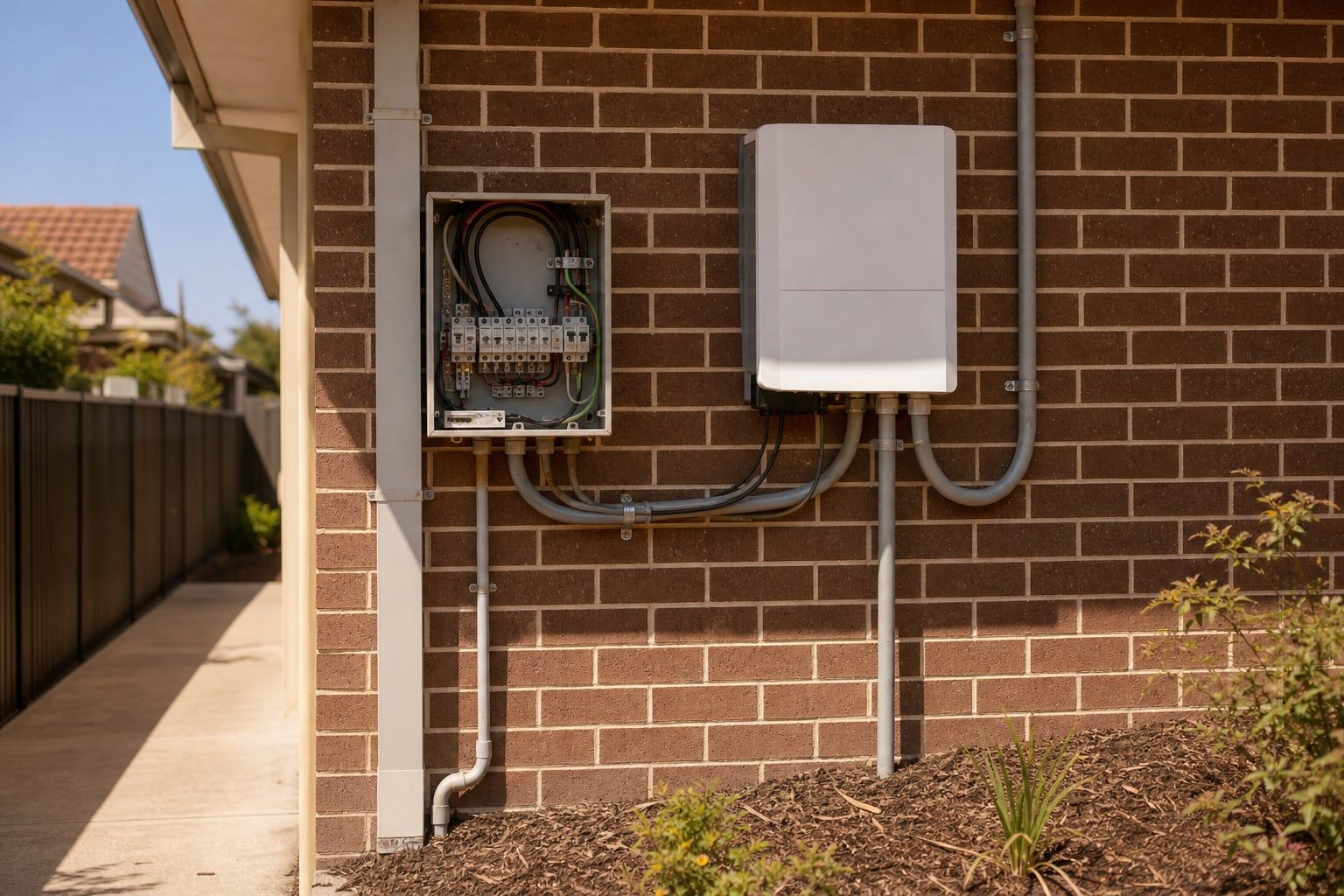
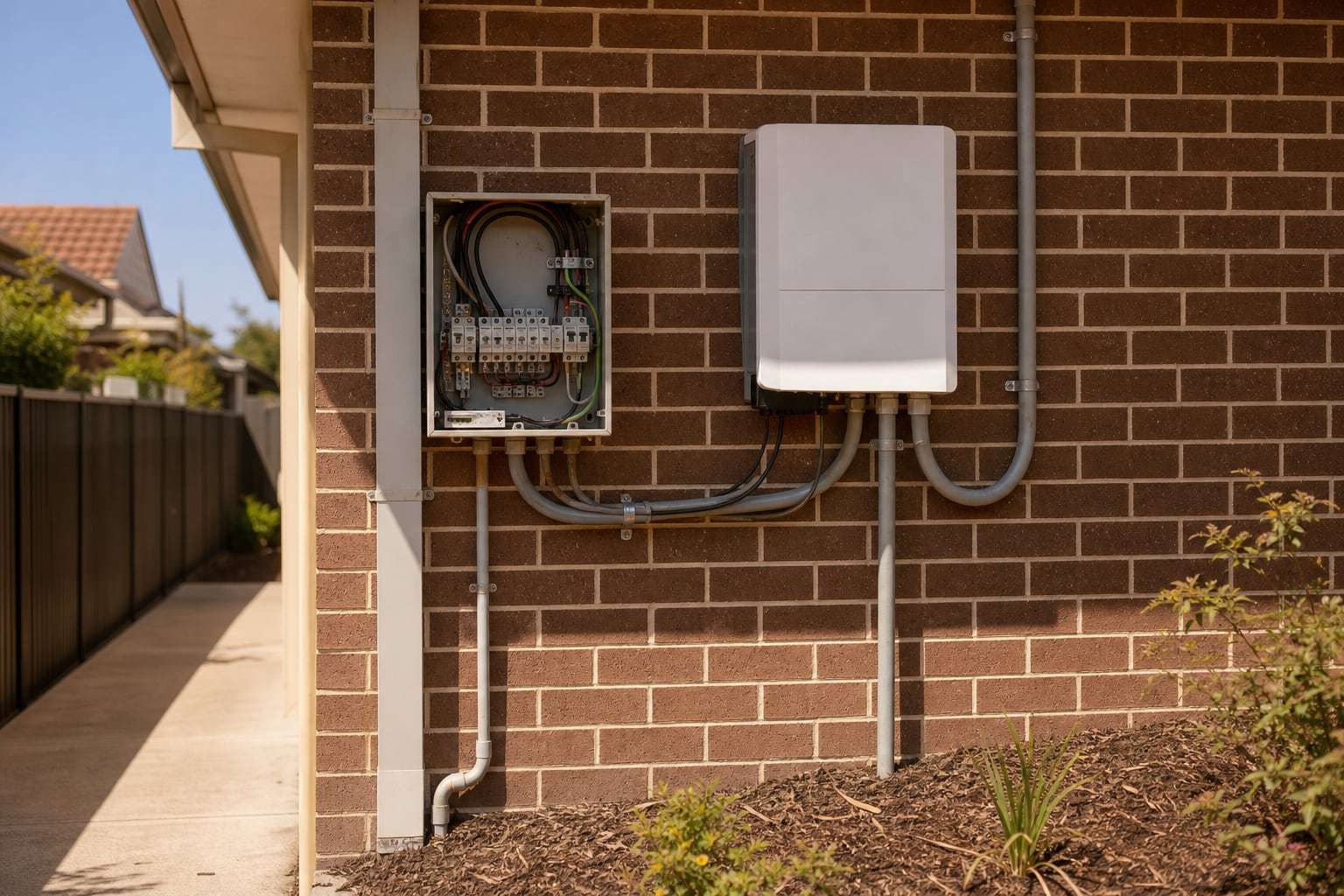
Option A: Keep single phase, upgrade the mains. If the combined load fits within a bigger single phase supply, a consumer mains upgrade replaces the old cable with one sized for both homes. The flat runs on sub-mains from the main switchboard.
Option B: Go three phase. If both homes will run heavy loads, or an EV charger and battery are on the list, a three phase power upgrade gives much more headroom. The load is spread across three phases, and the flat’s sub-mains come off the main board.
Option C: A separate supply. In some situations a separate connection and meter for the flat is possible. It depends on Endeavour Energy’s rules, your retailer and how the property is set up. We’ll explain whether it’s an option on your block.
Step 3: Check the overhead line
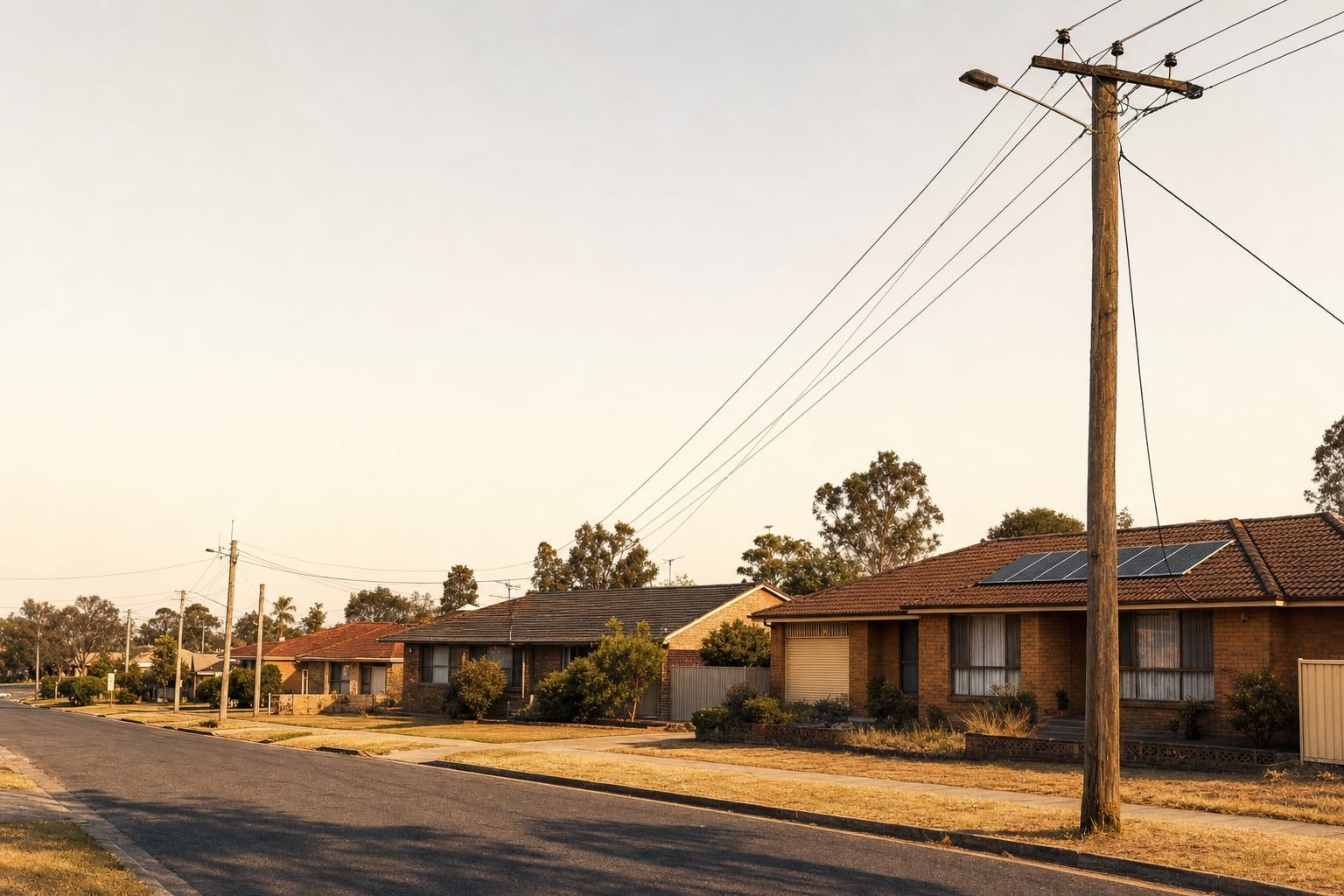
Many Liverpool homes have an overhead service line crossing the backyard or side passage. A granny flat, its carport or its pergola can end up under it. Before the slab goes down, check:
- Will the flat or its roof be too close to the line?
- Will the builders need cranes or scaffold near it?
- Is the raiser on the main house in a good position?
If the line is in the way, a point of attachment upgrade can raise or move it, or an overhead to underground conversion can remove it altogether.
Step 4: Plan the sub-mains route
The cable from the main switchboard to the flat runs underground in conduit. It’s your electrician’s job, but the route should be planned before landscaping and paths go in. If three phase might be added later, size the conduit for it now.
Step 5: Time it with the build
- Design stage. Load calculation and supply decision.
- Before the slab. Clearances checked; line moved or undergrounded if needed.
- Early in the build. Endeavour application lodged if upgrading or going three phase.
- During the build. Sub-mains conduit laid.
- Before handover. Main supply upgraded, flat connected, everything certified.
Common mistakes
Assuming the existing supply is enough. Many homes were built with mains sized for one household in the 1980s or 90s.
Leaving the upgrade to the end. Endeavour applications take time. Late lodging delays occupancy.
Ignoring the overhead line. Discovering a clearance problem after the frame is up is expensive.
Undersizing the sub-mains conduit. Adding capacity later means digging up the yard again.
Solar on the granny flat
Many owners add solar to the flat’s roof. That needs to be considered in the overall supply design and the network’s export rules. Tell your solar installer early.
EV charging
If anyone in either home will charge an EV, include it in the load calculation now. It’s often the item that tips the decision toward three phase.
Costs
The supply side of a granny flat varies with the existing setup. A straightforward mains upgrade costs much less than three phase with undergrounding. We give a fixed price after looking at the site and the plans.
Rental flats
If the flat will be rented, ask your electrician and retailer about metering and billing options early. The arrangement affects how the supply is set up.
Who does what
Your builder builds the flat. Your electrician designs the switchboards and sub-mains. We handle the network side: mains, three phase, raisers, undergrounding and the Endeavour paperwork. Your retailer handles meters.
Getting help
Call the level 2 electrician Liverpool team with your plans. We’ll check the existing supply and tell you what the flat needs. If you’re building a whole new home instead, see our new home power connection guide.
Updated
Granny flat power supply in Liverpool: common questions
Something else on your mind? Call 02 9158 9916 and ask.
Can a granny flat run off the main house supply?
Yes, through sub-mains from the main switchboard. The main supply often needs upgrading to carry both homes.
Can the granny flat have its own meter?
Sometimes. It depends on the network rules and your retailer. We'll explain the options for your block.
Will the overhead line be in the way of the flat?
It can be. We check clearances before the slab goes down.